What Makes a Snack Truly Healthy?
Beyond the buzzwords and clean packaging — here's what the science actually says about healthy snacking.

Walk into any supermarket and you'll find shelves full of snacks claiming to be "natural," "high-protein," or "guilt-free." But most of them are anything but. So what actually separates a genuinely healthy snack from one that just looks the part?
The answer is more nuanced than a single nutrient or ingredient. A truly healthy snack works on multiple levels: it supports your energy, keeps you full, doesn't spike your blood sugar, and delivers real nutritional value — not just clever marketing.
Here's the honest breakdown of what to look for — and what to run from.
The 5 Real Markers of a Healthy Snack
Forget "low fat" and "no added sugar" stickers. These are the five things that genuinely matter when evaluating whether a snack deserves a place in your daily routine.
-
Macronutrient Balance A solid snack delivers a meaningful combination of protein, healthy fats, and slow-release carbohydrates. This trio keeps blood sugar stable and hunger at bay. If a snack is mostly one macro — especially simple carbs — it won't sustain you.
-
Whole, Recognisable Ingredients Can you picture everything on the ingredients list in its natural form? Almonds, oats, dates, peas — yes. Maltodextrin, dextrose, soy protein isolate — much less so. The closer to nature, the better.
-
Low Added Sugar Not zero sugar — but low added sugar. Natural sugars from fruit or dates behave very differently in the body compared to refined sweeteners. Aim for under 5g of added sugar per snack.
-
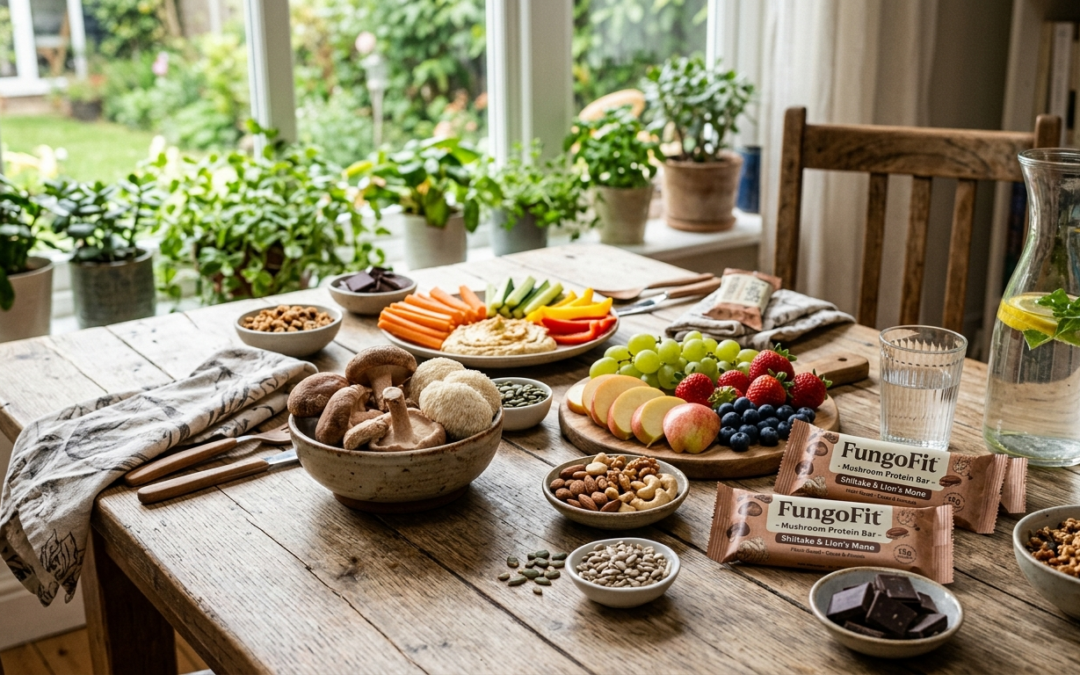
Functional Ingredients The best snacks go beyond basic nutrition. Think adaptogens, antioxidants, or plant compounds that actively support your health — like the Cordyceps mushroom in FungoFit bars, which supports natural energy production at a cellular level.
-
A Short Ingredients List If you need a chemistry degree to decode the label, that's a red flag. Genuinely healthy snacks don't need 20+ ingredients. Simplicity is a virtue.

How to Read a Nutrition Label Like an Expert
Most people glance at the calorie count and move on. But calories are one of the least useful numbers on the label. Here's what to actually pay attention to:
| What to check | Green flag ✓ | Red flag ✗ |
|---|---|---|
| Protein (per snack) | 8g+ from whole sources | Under 3g, or from isolated proteins only |
| Sugar (added) | Under 5g added sugar | More than 10g added sugar |
| Fibre | 3g+ per serving | Less than 1g |
| Fats | Mostly unsaturated (nuts, seeds) | High saturated fat from palm oil |
| Ingredients list length | Under 10 ingredients | 15+ ingredients, especially numbers/codes |
| First 3 ingredients | Whole foods (oats, almonds, dates) | Sugar, syrup, or refined flour |
The first three ingredients on any label tell you more about a food than the entire front of the packet.
3 "Healthy" Claims That Are Almost Always Misleading
Food marketing is sophisticated. Here are three claims that sound reassuring but often mean very little:
-
"Natural" This word has no legal definition in most countries. A snack can be labelled "natural" and still contain concentrated syrups, refined oils, and synthetic vitamins. Always check the actual ingredients list.
-
"High Protein" Technically, any food with 20% of its calories from protein can claim this. But 4g of protein from soy isolate in a 200-calorie bar isn't the same as 15g from almonds and peas. Source and quantity both matter.
-
"No Added Sugar" Watch out for concentrated fruit juice, agave nectar, honey, or rice syrup — all of which are added sugars with different names. If the snack tastes very sweet, those sweeteners are in there somewhere.

Why Functional Snacks Are the Next Level
A good snack keeps you full. A great snack actively supports your health. That's the difference between a basic protein bar and a functional snack.
Functional ingredients — adaptogens, medicinal mushrooms, antioxidant-rich plants — don't just fill a gap in your diet. They work with your body's own systems to produce better outcomes: more energy, sharper focus, reduced stress, stronger immunity.
This is why FungoFit built their bars around Cordyceps mushroom — not as a gimmick, but because the evidence base for its role in supporting natural energy and oxygen utilisation is genuinely compelling. It's the difference between a snack that feeds you and one that works for you.
Your Quick Snack Health Checklist
Before you pick up your next snack, run it through this rapid check:
- Do you recognise the first 3 ingredients? If yes, you're off to a good start.
- Is there at least 8g of protein? This is the minimum for a snack to genuinely support satiety.
- Is added sugar under 5g? Check for hidden sugar names if it tastes sweet.
- Are there any functional ingredients? Mushrooms, adaptogens, omega-3s — bonus points.
- Is the ingredients list under 10 items? Simplicity is usually a reliable signal of quality.
This article is written for general informational purposes. For personalised nutrition advice, consult a qualified dietitian or nutritionist.
Functional by Design
Every FungoFit bar is built around a meaningful dose of adaptogenic mushrooms — not a sprinkling for show.
Learn our philosophy →Whole Ingredients Only
No synthetic vitamins, no soy isolate, no 20-ingredient lists. Just real food that works.
See ingredients →Monthly Supply Available
Save on your order and never run out of your healthiest daily snack habit.
Shop subscriptions →